
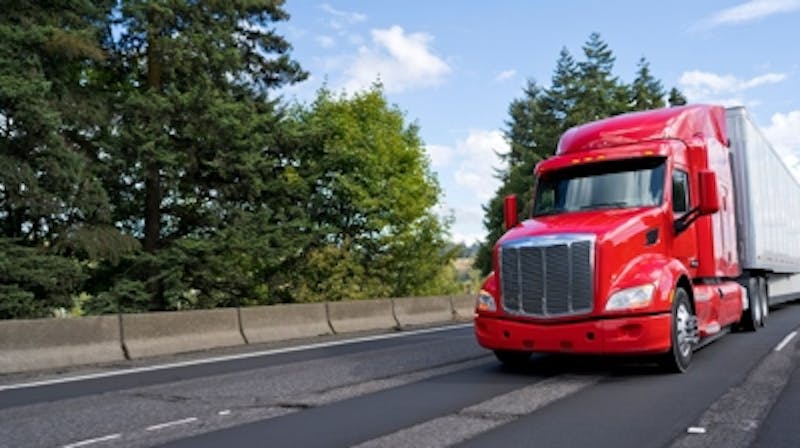
In Mississippi, the commercial trucks involved in the most accidents are tractor-trailers (the classic 18-wheeler), followed by box and delivery trucks, dump trucks, tanker trucks, logging trucks, livestock and poultry trucks, and refuse and sanitation trucks.
Mississippi sits at the crossroads of two of the busiest freight corridors in the South, Interstate 20 running east to west and Interstate 55 running north to south. Add in the timber, poultry, construction, and municipal services industries that move heavy loads through Hinds County every day, and you get commercial truck traffic. And unfortunately, where heavy trucks go, serious wrecks follow.
At 'Maggio Law, we've spent 25+ years fighting for Mississippians hurt by careless truck drivers and the trucking giants that employ them. Mike Saltaformaggio ('Maggio) built this firm to do the kind of personal, hands-on work the billboard firms simply won't. From our offices we've recovered millions for injured truckers, motorists, and families across the Gulf South. We know the Mississippi statutes that quietly decide how much your case is worth, and we know how to lock down evidence before the trucking company makes it disappear.
In this blog, we’ll break down the commercial truck types, the crash patterns and contributing factors tied to each, the injuries we see most often, the Mississippi laws that shape every recovery, and the legal complexity that makes truck cases different from any other personal injury claim.
Key Terms
- Commercial Motor Vehicle (CMV): A vehicle used for business that meets federal weight, passenger, or hazmat thresholds. Per the Federal Motor Carrier Safety Administration (FMCSA), most are over 10,001 pounds gross weight.
- Tractor-trailer (18-wheeler, semi): A two-part rig made up of a tractor pulling a separate trailer. Can weigh up to 80,000 pounds fully loaded under federal law.
- Hours-of-Service (HOS): Federal rules limiting how long a commercial driver can be behind the wheel before resting. Codified by the FMCSA's Hours of Service regulations.
- Electronic Logging Device (ELD): The "black box" of a commercial truck. ELDs record driving hours, speed, location, and engine data. Required by the FMCSA's ELD rule since 2017.
- Automatic Emergency Braking (AEB): Onboard technology that detects an imminent collision and automatically applies the brakes. NHTSA and FMCSA jointly issued a proposed rule to require AEB on most new heavy vehicles.
- Underride Crash: A wreck where a passenger vehicle slides under a truck's trailer. Often catastrophic or fatal.
- Override Crash: The opposite. A truck rolls up over a smaller vehicle, usually at low speed in stop-and-go traffic.
- Jackknife: When a tractor and its trailer fold toward each other at the connection point, forming a "V" shape across the road.
- Spoliation Letter: A formal demand sent to a trucking company telling them to preserve evidence (ELD data, dashcam, logs, maintenance records). Without it, evidence often "disappears."
- Statute of Limitations: Mississippi's filing deadline. Most personal injury cases must be filed within three years of the wreck under Miss. Code Ann. § 15-1-49(1). Wrecks involving government-owned trucks have a much shorter deadline.
- Pure Comparative Negligence: Mississippi's fault rule under Miss. Code Ann. § 11-7-15. Even if you were partially at fault, you can still recover damages reduced by your fault percentage. You're only barred entirely if you're 100% to blame.
- Mississippi Tort Claims Act (MTCA): The statute governing claims against state and local government, including municipal sanitation trucks, county dump trucks, and MDOT vehicles. Found at Miss. Code Ann. § 11-46-1 et seq.. Imposes a 90-day pre-suit notice and a one-year filing deadline.
- Damage Caps: Mississippi limits non-economic damages (pain and suffering) to $1,000,000 in most personal injury cases under Miss. Code Ann. § 11-1-60. Total damages against the government are capped at $500,000 under Miss. Code Ann. § 11-46-15.
Mississippi Truck Wreck Numbers
According to the USDOT Federal Highway Administration Highway Statistics and the Fatality Analysis Reporting System (FARS):
- 97 fatal commercial motor vehicle (CMV) crashes in Mississippi in 2023, up from 79 the prior year
- From 2018 through 2023, Mississippi averaged roughly 87 fatal CMV crashes per year, with a recent peak of 100 in 2021
- Mississippi's 2023 fatal CMV crash rate was 0.237 fatalities per 100 million vehicle-miles traveled, higher than Texas (0.218), Alabama (0.174), Louisiana (0.200), Florida (0.148), Georgia (0.142), and more than double California's rate (0.116)
- That puts Mississippi in the upper tier of fatal CMV crash rates nationally, alongside Oklahoma, Arkansas, Kentucky, and New Mexico
Nationwide, more than 5,800 people are killed each year in crashes involving large trucks, with another 160,000+ injured, per the FMCSA's Large Truck and Bus Crash Facts. Fatal large-truck crashes climbed sharply from 2009 through the early 2020s.
Types of Commercial Trucks Behind Most Crashes
1. Tractor-Trailers (18-Wheelers)
Far and away, this is the most common heavy truck on interstates. They haul everything from auto parts to groceries through I-20 and I-55, causing the most catastrophic wrecks.
Common crash types include the following:
- Jackknife crashes (especially on wet I-55)
- Underride collisions
- Rear-end crashes from delayed braking
- Lane-change and blind-spot wrecks
- Rollovers on entrance and exit ramps
Contributing factors include:
- Driver fatigue and Hours-of-Service violations
- Improper cargo loading
- Brake failure and poor maintenance
- Aggressive scheduling pressure from carriers
- Inexperienced or undertrained drivers (a factor amplified by the ongoing driver shortage and accelerated CDL pipelines)
2. Box Trucks and Delivery Vehicles
The continued growth of e-commerce has put a fleet of FedEx, UPS, Amazon DSP, and contract delivery trucks on streets, along County Line Road.
They're smaller than 18-wheelers but still weigh far more than a car. Many are operated by contract drivers under quota-driven dispatch.
Common crash types include the following:
- Backing-up collisions in parking lots and driveways
- Pedestrian strikes in residential neighborhoods
- Rear-end wrecks in stop-and-go traffic
- Sideswipes when re-entering traffic from a delivery stop
Contributing factors include:
- Distracted driving (route tablets, scanners, phones)
- Punishing delivery quotas
- Drivers unfamiliar with local streets
- Lack of backup cameras or spotters
- Independent contractor relationships that complicate liability
3. Dump Trucks and Construction Vehicles
Hinds County's ongoing road work, residential development, and aggregate hauling keep dump trucks rolling. They typically operate at lower speeds but carry massive, often unsecured loads. Many dump trucks in the metro are county or MDOT-owned, which triggers the Mississippi Tort Claims Act.
Common crash types include:
- Falling debris and rock strikes
- Rear-end collisions at construction zones
- Rollovers when turning with a raised bed or shifted load
- Side-impact crashes at intersections
Contributing factors include the following:
- Overloaded beds
- Unsecured loads
- Tight construction-zone timelines
- Operator visibility limitations
4. Tanker Trucks (Fuel, Chemical, Liquid Cargo)
Mississippi's industrial corridor pushes a steady stream of fuel and chemical tankers. Their high center of gravity and liquid cargo dynamics make them uniquely dangerous.
Common crash types associated with tanker trucks involve:
- Rollovers on ramps and curves
- Hazardous material spills and fires
- Multi-vehicle pileups after a tanker incident
Contributing factors often include:
- Liquid surge (sloshing cargo shifts weight)
- Driver inexperience with tanker dynamics
- Hazmat handling violations
- Inadequate inspection and maintenance
5. Logging Trucks
Mississippi's timber industry is one of the largest in the country, per the Mississippi Forestry Commission. Loaded log trucks roll through and around the metro on US-49, MS-25, and the rural highways feeding into the interstates.
Common crash types include:
- Shifting or falling log loads
- Rear-end wrecks (heavy stopping distance)
- Cross-centerline crashes on two-lane rural roads
Contributing factors include the following:
- Improperly secured loads
- Long shifts and remote routes
- Weight that exceeds safe stopping limits
- Limited rural enforcement of HOS rules
6. Livestock and Poultry Trucks
Mississippi's poultry industry is a top-five producer nationally, per the USDA National Agricultural Statistics Service. Live haul trucks move broilers and breeders across central Mississippi day and night.
Common crash types associated with livestock and poultry trucks include:
- Rollovers (high center of gravity, live load shift)
- Road debris from cages or feathers
- Lane drift from overworked drivers
Some contributing factors include:
- Live cargo movement
- Tight, weather-driven processing schedules
- Driver fatigue
- Long pre-dawn and overnight runs
7. Refuse and Sanitation Trucks
Garbage and recycling trucks move through every neighborhood and the surrounding metro on a weekly cycle. Most are owned by, surrounding municipalities, or private contractors operating under municipal contracts. That ownership matters: when a city-owned sanitation truck causes a wreck, the Mississippi Tort Claims Act controls everything.
Common crash types include:
- Backing collisions and pedestrian strikes
- Side-swipes during narrow-street pickup
- Rear-end wrecks at frequent stops
- Loader and mechanical-arm injuries
Examples of contributing factors are:
- Pre-dawn fatigue
- Blind spots from large hopper bodies
- Distracted or rushed routes
- Equipment malfunction
Crash Types, Causes, Injuries, and Outcomes
The table below summarizes how each truck type tends to fail and the human cost when it does. Settlement ranges shown reflect general U.S. personal injury outcomes by injury severity, not 'Maggio Law-specific results, and every case turns on its own facts. Important Mississippi caveat: non-economic damages are capped at $1,000,000 under Miss. Code Ann. § 11-1-60, and total damages against any government entity are capped at $500,000 under Miss. Code Ann. § 11-46-15.
| Trucks Type | Most Common Crash | Top Contributing Factors | Typical Injuries | Injuries Severity | Illustrative Settlement Range |
| Tractor-Trailer | Jackknife, underride, rear-end | Fatique, HOS violations, brake failure | TBI, spinal cord, multi-system trauma | Catastrophic to fatal | $250,000 to $5M+ |
| Box/Delivery Truck | Rear-end backing, pedestrian strike | Ditraction quotas, blind | Whiplash, fractures, soft tissue, pedestrian trauma | Moderate to severe | $25,000 to $500,000 |
| Dump Truck | Falling debris, rollover, intersection wreck | Overload, unsecured cargo, visibility | Lacerations, crush injuries, head trauma | Moderate to severe | $50,000 to $1M+ |
| Tanker Truck | Rollover, hazmat spill multi-vehicle pileup | Liquid surge, hazmat violations | Burns, inhalation injury, blunt-force trauma | Severe to fatal | $500,000 to $10M+ |
| Logging Truck | Falling load, head-on, rear-end | Unsecured load, rural fatigue | Crush blunt-force, fatal trauma | Severe to fatal | $250,000 to $1M+ |
| Livestock/Poultry Truck | Rollover, lane drift, debris | Live load shift, fatigue | Fractures, TBI, soft tissue | Moderate to severe | $50,000 to $1M+ |
| Refuse/Sanitation Truck | Backing, pedestriam strike, side-swipe | Fatigue, blind spots, equipment failure | Crush, pedestriam trauma, fractures | Moderate severe (often gov't capped) | $50,000 to $500,000 |
| Crash Mechanism | Body Region Most Affected | Common Diagnoses |
| Underride | Head, neck, chest | TBI, decapitation, thoracic trauma |
| Jackknife | Full body | Polytrauma, crush injuries |
| Rollover | Head, spine, internal organs | Spinal cord injury, organ rupture |
| Rear-end (truck striking car) | Neck, back, head | Whiplash, herniated discs, concussion |
| Hazmat/fire | Skin, lungs | Burns, inhalation injury, PTSD |
| Backing/pedestriam strike | Lower body, head | Pelvic fractures, TBI, crush injuries |
Why Truck Cases Are Legally Different
To reiterate, truck wrecks are complex, regulated, multi-defendant cases governed by a thick book of federal rules and a tight set of Mississippi statutes. The trucking company's rapid-response team is often on scene within hours, sometimes before the driver gets out of the truck, working to control the narrative and the evidence.
If you don't have a lawyer doing the same thing on your side, you could be facing a much more difficult case. The following are examples of evidence that “disappears” if not quickly retained by your attorney:
- Electronic Control Module (ECM) "black box" data
- ELD logs
- Dashcam and forward-facing camera footage
- GPS and telematics records
- Pre-trip and post-trip inspection reports
- Driver qualification file
- Drug and alcohol screening records (including Clearinghouse queries)
- Maintenance and repair history
- Bills of lading and dispatch communications
- AEB system data and event recorder downloads (on equipped trucks)
A timely spoliation letter from a truck accident lawyer puts the trucking company on legal notice. Without that letter, key data is often overwritten or "lost" in the normal course of business.
Additionally, Multiple Parties Can Share Liability in a Truck Case, which further complicates the matter. These parties may include:
- The driver
- The trucking company (motor carrier)
- The truck owner (if different from the carrier)
- The cargo loader or shipper
- The maintenance contractor
- The truck or component manufacturer
- A third-party broker
- An independent contractor or delivery service partner (common in last-mile delivery)
- A government entity, if a public truck is involved
Mississippi Laws That Shape Your Recovery
Federal rules tell us how the trucking company should have operated. Mississippi statutes tell us what your case is actually worth, how long you have to file, and how fault gets divided.
Filing Deadlines
| Type of Claim | Deadline | Statute |
| Standard truck wreck personal injury | 3 years from date of injury | Miss. Code Ann. § 15-1-49(1) |
| Delayed-discovery injury (e.g., latent TBI) | 3 years from date you knew or should have known | Miss. Code Ann. § 15-1-49(2) |
| Wreck involving any government-owned truck | 1 year ( plus 90-day pre-suit notice) | Miss. Code Ann. § 11-46-11 |
| Minor or legally disabled victim | Tolled until disability ends | Miss. Code Ann. § 15-1-59 |
| Defendant leaves Mississippi | Tolled during absence | Miss. Code Ann. § 15-1-63 |
Pure Comparative Negligence
Mississippi follows a pure comparative negligence rule. You can recover even if you were mostly at fault. Your recovery just gets reduced by your share of the blame; only 100% fault wipes you out completely.
If a jury says your damages total $200,000 and finds you 25% at fault, you take home $150,000. If they find you 60% at fault, you still take home $80,000 (Miss. Code Ann. § 11-7-15).
This is why anything you say to the trucking company's adjuster, the responding officer, or on social media gets used to bump up your fault percentage and shrink your recovery.
Damage Caps
| Case Type | Cap | Statute |
| Non-economic damages, standard personal injury | $1,000,000 | Miss. Code Ann § 11-1-60 |
| All damages, claims against government | $500,000 | Miss. Code Ann. § 11-46-15 |
| Puntitve damages (defendant net worth ≤ $50M) | 3% of net worth | Miss. Code Ann. § 11-1-65 |
Economic damages (medical bills, lost wages, future care, vocational losses) are not capped in standard personal injury cases. That makes thorough medical documentation and a complete damages workup essential.
Where Truck Accident Cases Get Filed
Most Mississippi truck cases are filed in Circuit Court for the county where the defendant lives or has its principal place of business. If the defendant is out of state, you can file in the county where you live or where the wreck happened. After filing, the defendant must be served within 120 days under Mississippi Rule of Civil Procedure 4.
Was the Truck Government-Owned?
Plenty of the heavy trucks rolling through belong to a city, county, state, or federal agency, like:
- Sanitation and recycling trucks
- MDOT dump trucks
- County mosquito-spray rigs
- State highway department maintenance trucks
- Public works vehicles
- University fleet trucks
If a government-owned truck is involved, the Mississippi Tort Claims Act applies as follows:
- Written pre-suit notice by certified or registered mail to the chief executive officer of the responsible
- government entity, at least 90 days before filing, per Miss. Code Ann. § 11-46-11
- Statute of limitations drops from three years to one year
- Total damages capped at $500,000 under Miss. Code Ann. § 11-46-15
- No punitive damages recoverable
- Attorney's fees not recoverable unless specifically authorized
If you miss the 90-day notice, you’ll lose the case. That's why the very first thing we ask after a truck wreck is whether any of the involved vehicles were government-owned.
Talk to Mike Before You Talk to Them
A Mississippi truck wreck case is won or lost in the first few weeks, and most of that work happens before a lawsuit is ever filed. Evidence has to be preserved, and medical care has to be documented for the long-haul recovery insurance companies prefer to ignore. That's the work Mike Saltaformaggio has built his career around.
When you call 'Maggio Law, Mike is the lawyer on your case. He reviews the crash report. He answers when the carrier's adjuster calls. He appears in court when it's time to try it. Not a paralegal or a delegated associate, but Mike himself.
The first conversation costs you nothing, and we don't take a fee unless we recover for you. Before you sign anything, Mike will tell you honestly what he thinks of your case, what it will take to fight it, and whether you actually need a lawyer at all.
If a commercial truck hurt you or someone you love anywhere in Mississippi, contact us today.
Disclaimer: The information on this page is for general informational purposes only and does not constitute legal advice. Reading this content does not create an attorney-client relationship with 'Maggio Law. Every case is different. Contact our office at (601) 588-8811 for a free consultation specific to your situation.